Learning online has become one of the most practical ways to grow professionally in 2026. Whether someone wants to improve job skills, explore a new career path, or simply learn something meaningful during free time, online education now offers more flexibility and accessibility than ever before.
What makes this shift especially interesting is that quality education is no longer limited to expensive classrooms or long degree programs. Today, learners can access courses from respected universities and global companies directly from their laptops or phones.
That is one reason Coursera continues to attract millions of learners around the world.
The platform has built a strong reputation by offering structured online courses from institutions such as Stanford University, Yale University, Google, IBM, and Meta. While many people know Coursera for its paid certifications and career programs, fewer realize how many valuable courses can actually be accessed for free.
For beginners especially, free courses offer a low pressure way to start learning without making a major financial commitment. They allow people to explore interests, build confidence, and understand new industries before deciding whether to pursue deeper specialization.
In many ways, free learning can become the first step toward larger career opportunities.
Why Free Online Courses Matter More Than Ever
The modern workplace changes quickly. New technologies, digital tools, and workplace expectations continue evolving across industries. Professionals are expected to adapt faster than before, which creates pressure for continuous learning.
At the same time, not everyone has the budget or flexibility to invest immediately in premium education programs.
This is where free courses become incredibly valuable.
A free course allows someone to test a subject before committing more time or money. For example, a marketing professional curious about data analytics can explore beginner concepts first. A business owner interested in artificial intelligence can learn the basics without enrolling in an advanced technical program immediately.
This accessibility helps make education feel less intimidating.
For many learners, the biggest challenge is simply getting started. Free online learning removes much of that hesitation.
What Makes Coursera Free Courses Different
The internet is full of educational content, but not all learning platforms provide the same level of quality and structure.
One major advantage of Coursera is that even free courses often maintain strong academic and professional standards. Learners are not simply watching random videos uploaded without organization or context. Many courses follow structured lesson plans with guided topics, quizzes, readings, and assignments.
The educational partnerships also add credibility.
When someone studies a course created by Google, IBM, Stanford University, or Yale University, the learning experience naturally feels more trustworthy. That reputation matters because learners want confidence that the information reflects real industry knowledge and current best practices.
Another helpful feature is flexibility. Many free courses on Coursera can be audited at a personal pace, allowing learners to study around work schedules, family responsibilities, or travel.
This balance between accessibility and quality is one reason the platform continues growing globally.
The Science of Well Being by Yale University
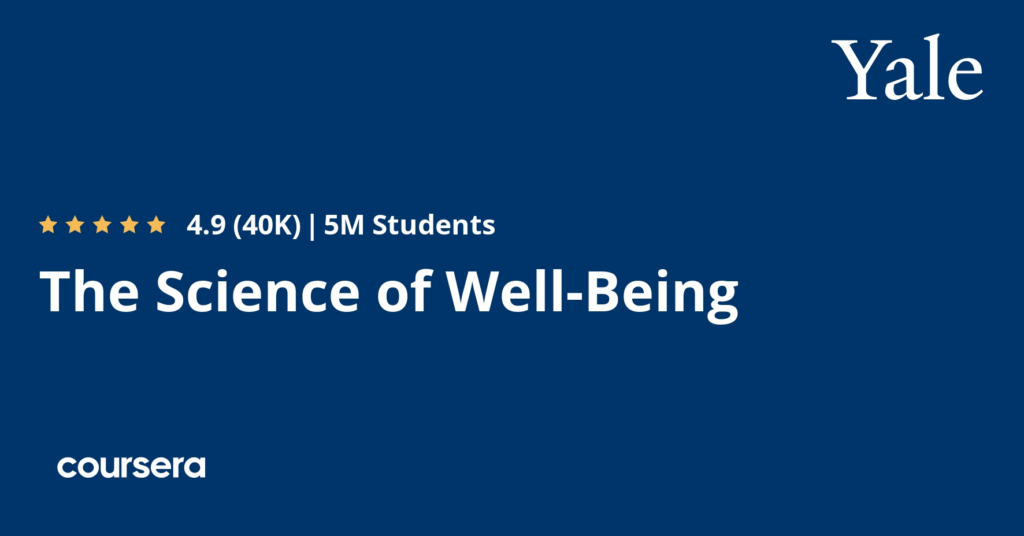
One of the most widely recognized free courses on Coursera is The Science of Well Being from Yale University.
At first glance, some learners may overlook personal development courses because they focus heavily on career advancement. However, workplace success and personal wellbeing are closely connected in modern professional life.
This course explores topics related to happiness, habits, productivity, and mental wellbeing through research based lessons. Rather than offering generic motivational advice, it explains psychological concepts in a practical and relatable way.
Many learners appreciate that the course feels thoughtful and realistic. It encourages small behavioral improvements rather than dramatic life changes.
For busy professionals dealing with stress, burnout, or career uncertainty, courses like this can provide meaningful perspective alongside professional development.
Google AI Essentials
Artificial intelligence has become impossible to ignore in 2026. Businesses across industries now use AI tools for productivity, customer service, research, marketing, and automation.
As a result, professionals increasingly want to understand how AI works even if they are not technical experts.
Google AI Essentials on Coursera offers a beginner friendly introduction to practical AI usage. The course focuses less on complex programming and more on helping learners understand how AI tools fit into real workplace scenarios.
This makes the course especially useful for marketers, business owners, remote workers, and administrative professionals who want to stay competitive in evolving industries.
One reason learners enjoy beginner AI courses is that they reduce fear around unfamiliar technology. Instead of treating AI as something only engineers can understand, the course presents it as a practical tool that many professionals can learn to use responsibly and effectively.
Introduction to Data Analytics by IBM

Data skills continue to become valuable across nearly every industry.
Companies now rely heavily on information to improve decision making, customer experiences, and business operations. Even non technical roles increasingly benefit from basic analytical understanding.
The Introduction to Data Analytics course by IBM provides a strong starting point for beginners interested in this field.
Learners explore how data is collected, interpreted, and applied in business settings. The course explains foundational concepts clearly without overwhelming beginners with advanced technical language.
For someone considering a future transition into analytics, business intelligence, or digital marketing, this course can serve as an approachable introduction before committing to deeper specialization programs.
Foundations of Project Management by Google
Project management is one of the most transferable professional skills today.
Whether someone works in healthcare, technology, education, finance, or retail, organizations value professionals who can organize tasks, communicate effectively, and manage timelines successfully.
The Foundations of Project Management course from Google introduces learners to the basics of planning, collaboration, leadership, and workflow management.
One reason this course resonates with many learners is that project management skills already appear in everyday life. People coordinating teams, handling schedules, or organizing business processes often discover they already use many project management principles without realizing it.
This makes the course feel practical rather than overly academic.
Introduction to Cybersecurity Tools and Cyber Attacks
Cybersecurity has become one of the fastest growing industries in recent years, but many beginners feel intimidated by the topic.
The Introduction to Cybersecurity Tools and Cyber Attacks course on Coursera helps make the field more approachable.
Instead of assuming technical expertise, the course explains common security concepts, digital risks, and cyber threats in a beginner friendly format.
This is particularly useful because cybersecurity awareness now matters beyond IT departments alone. Business owners, freelancers, remote workers, and everyday professionals all benefit from understanding digital safety practices.
For learners considering future technology careers, this course can also provide a realistic introduction to cybersecurity fundamentals before pursuing advanced certifications.
Learning Without Pressure Creates Better Habits

One underrated advantage of free courses is the ability to learn without immediate pressure.
Many people avoid education because they worry about making the wrong investment or choosing the wrong career direction. Free learning creates space for exploration.
Someone curious about UX design can take an introductory course before deciding whether to pursue a full certification. A finance professional can experiment with coding basics without leaving their current job.
This flexibility helps learners discover interests naturally rather than forcing major career decisions too quickly.
In many cases, free courses also help rebuild learning confidence. Adults returning to education after several years often appreciate the opportunity to ease back into structured learning gradually.
How to Get the Most Value From Free Courses
The best results usually come from treating free learning seriously.
Even though there may be no financial pressure, consistent engagement still matters. Taking notes, completing assignments, and applying lessons through personal projects can significantly improve retention and confidence.
For example, someone learning data analytics can practice with public datasets. A beginner web designer can build sample pages. A project management learner can apply organizational systems to personal or professional tasks.
Practical application transforms passive learning into useful experience.
Many learners also benefit from setting realistic schedules. Even thirty minutes of focused study several times per week can create meaningful progress over time.
Why Coursera Continues to Be Trusted in 2026
Online learning platforms succeed when they balance accessibility with quality.
One reason Coursera continues to maintain strong credibility is that it combines flexibility with structured education from respected institutions and companies. Even its free learning options often feel organized, professional, and genuinely useful.
The platform supports learners at different stages of life and career development. Students exploring future industries, professionals building new skills, freelancers adapting to changing markets, and lifelong learners all benefit from having accessible educational options.
Importantly, the experience feels educational first rather than aggressively promotional. That balance helps build trust with learners who want honest and practical guidance.
Final Thoughts on Starting Your Learning Journey
Beginning a learning journey does not always require a major financial commitment or a complete career reset.
Sometimes the most important step is simply starting.
Free courses provide an opportunity to explore interests, build confidence, and develop valuable skills gradually. Whether someone wants to understand artificial intelligence, improve productivity, explore cybersecurity, or strengthen leadership abilities, accessible education can open meaningful new possibilities over time.
For learners looking for flexibility, credibility, and practical learning opportunities, Coursera continues to offer one of the strongest free learning experiences available in 2026.
The platform proves that high quality education can be both accessible and genuinely useful for modern learners who want to grow personally and professionally at their own pace.