The global banking industry is undergoing a major transformation, driven by advancements in finance technology. One of the most disruptive forces in this shift is the rise of neobanks, digital-only banks that operate without physical branches. Built on modern tech infrastructure and designed around customer convenience, neobanks are rapidly changing how people manage, save, and spend money.
Today, millions of users rely on neobanks for everyday transactions, international transfers, budgeting tools, and more. As digital adoption accelerates, these institutions are shaping the future of global finance.
What Are Neobanks?
Neobanks are fully digital banks that offer financial services through mobile apps and online platforms. Unlike traditional banks, they do not operate physical branches and instead leverage advanced finance technology to deliver seamless, low-cost services.
Most neobanks provide:
- Checking and savings accounts
- Debit cards
- Low-fee international transfers
- Automated budgeting tools
- Instant notifications for spending
- Peer-to-peer transfers
- High-yield savings options
Their customer-centric design and tech-first approach make banking easier, faster, and more transparent.
Why Neobanks Are Rising Globally
Several factors have contributed to the rapid rise of neobanks:
1. Growth of Mobile & Internet Connectivity
With smartphones becoming essential tools, consumers prefer managing finances digitally. Neobanks fit naturally into this behavior.
2. Lower Operating Costs
Without branches or heavy infrastructure, neobanks can operate at a fraction of the cost of traditional banks passing savings to customers through lower fees.
3. Demand for Simplicity
People are tired of complex banking processes. Neobanks offer:
- Quick onboarding
- Instant KYC
- Transparent pricing
- Intuitive apps
4. The Rise of Fintech Adoption
As consumers become comfortable with finance technology, switching to digital banking becomes effortless.
Key Benefits of Neobanks
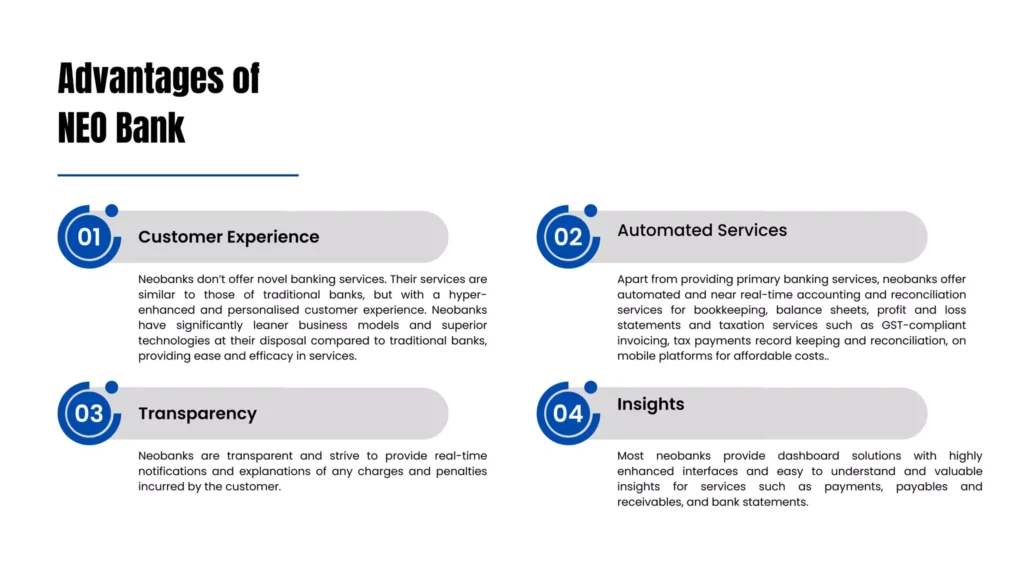
Neobanks provide several advantages that make them appealing to modern consumers:
1. Fast & Easy Account Opening
Most neobanks allow users to open accounts within minutes using digital KYC, eliminating paperwork and long branch visits.
2. Low or Zero Fees
With reduced overhead costs, neobanks often charge minimal fees for:
- ATM withdrawals
- International transfers
- Currency exchange
- Monthly maintenance
3. User-Friendly App Experience
Neobanks typically offer beautifully designed apps featuring:
- Real-time spending notifications
- Smart budgeting tools
- Automatic categorization of expenses
- Goal-based savings
4. Better International Banking
Many neobanks provide cheaper and faster cross-border transactions compared to traditional institutions.
5. Innovative Features
Leveraging finance technology, neobanks introduce features like:
- Round-up savings
- Instant credit lines
- Virtual cards
- Subscription management
These innovative tools make money management more convenient and transparent.
Risks & Limitations of Neobanks
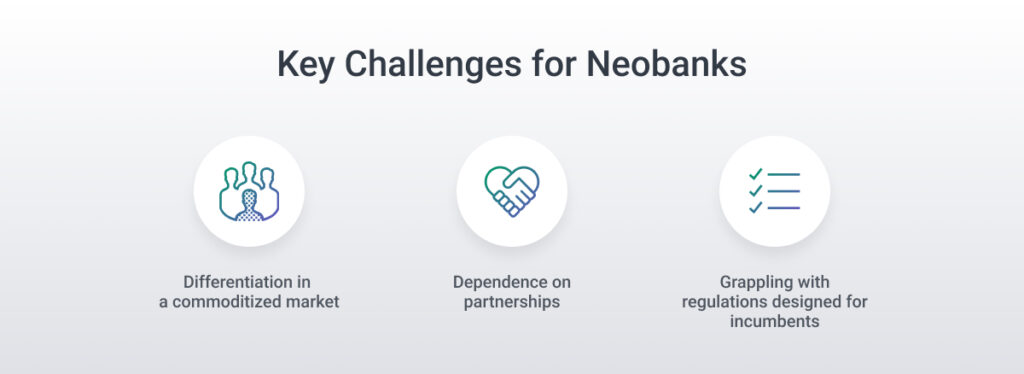
Despite their benefits, neobanks come with challenges consumers should be aware of:
1. Limited Financial Products
Some neobanks may not offer:
- Loans
- Mortgages
- Investment products
Their services, while improving, may not match the full spectrum provided by traditional banks.
2. Lack of Physical Branches
Customers who prefer in-person support or need complex services may find digital-only assistance insufficient.
3. Regulatory Gaps
Many neobanks operate under partner banks’ licenses. In regions with less-developed fintech regulations, consumer protection may vary.
4. Cybersecurity Risks
Being fully digital makes them attractive targets for cyberattacks. While security is strong, risks persist:
- Data breaches
- Phishing scams
- Account takeovers
5. Profitability Concerns
A majority of neobanks are still not profitable, raising long-term sustainability questions.
How Neobanks Are Disrupting Traditional Banking
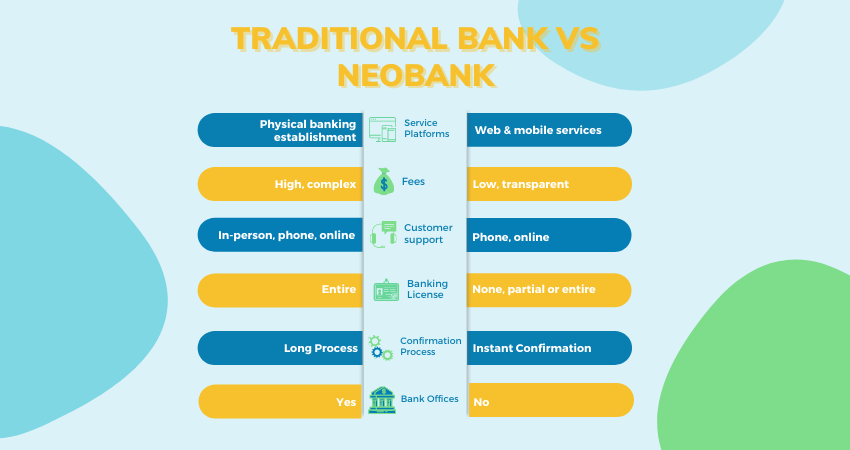
Neobanks are forcing traditional banks to innovate by:
- Improving digital user experience
- Lowering service fees
- Offering mobile-first services
- Adopting new finance technology
- Creating hybrid digital banking models
This competition pushes the entire industry toward modernization.
Future Outlook: What’s Next for Neobanks?
The future of neobanks looks promising, with several trends shaping the next decade:
1. Expansion Into Lending
More neobanks are expected to introduce personal loans, credit cards, and micro-lending products.
2. Integration With AI & Automation
AI-driven financial planning, fraud detection, and personalized banking will become standard.
3. Growth of Embedded Finance
Neobanks will partner with e-commerce, travel, and retail apps to embed financial services seamlessly.
4. Global Expansion
As smartphone adoption grows, neobanks will reach underserved markets and promote financial inclusion.
5. Digital Currencies & Web3
The rise of CBDCs and blockchain-based finance will play a major role in the evolution of digital banking.
Final Thoughts
Neobanks represent a major shift in global banking, offering speed, affordability, and innovation driven by advanced finance technology. While challenges exist, their advantages and rapid adoption indicate that digital-first banking is here to stay.
With continued innovation, strong regulation, and improved financial literacy, neobanks are likely to become key pillars of the future financial ecosystem reshaping how people around the world access and manage their money.